Leetcode Tencent 50 Task14 236. Lowest Common Ancestor of a Binary Tree
描述
给定一个二叉树, 找到该树中两个指定节点的最近公共祖先。
百度百科中最近公共祖先的定义为:“对于有根树 T 的两个结点 p、q,最近公共祖先表示为一个结点 x,满足 x 是 p、q 的祖先且 x 的深度尽可能大(一个节点也可以是它自己的祖先)。”
例如,给定如下二叉树: root = [3,5,1,6,2,0,8,null,null,7,4]
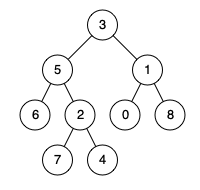
示例 1:
1 | 输入: root = [3,5,1,6,2,0,8,null,null,7,4], p = 5, q = 1 |
示例 2:
1 | 输入: root = [3,5,1,6,2,0,8,null,null,7,4], p = 5, q = 4 |
说明:
- 所有节点的值都是唯一的。
- p、q 为不同节点且均存在于给定的二叉搜索树中。
来源:力扣(LeetCode)
链接:236. Lowest Common Ancestor of a Binary Tree
解题思路
这道题在上一道题的基础上少了一个搜索的条件,那么原来二叉搜索树的节点值左<根<右的性质就不能用了,但是递归的思路还是可行的:
- 边界条件:
- 如果
root为空,则返回NULL - 如果
root等于其中某个节点,则返回root
- 如果
- 分而治之
left = lowestCommonAncestor(root->left, p, q)right = lowestCommonAncestor(root->right, p, q)
- 结果返回
- 如果
left和right都不为空时,说明p和q一个在root的左子树,一个在root的右子树,返回root - 如果只有
left有返回值,说明left的返回值是最小公共祖先 - 如果只有
right有返回值,说明right的返回值是最小公共祖先
- 如果
代码
1 | /** |